


Eat Yourself Silly
It's happened to you before. You're at a chinese restaurant, and you order a couple dishes. Someone at the table says, 'is that enough?'
Some people have their doubts, but invariably, the standard reply will come - 'it's ok, if there isn't enough, we can always order more.'
So many times, there just isn't enough food to go around; but then, once everything has been eaten, who would REALLY order a second round? You end up going home a little hungry, and before you know it, you're awake at midnight, trying to think of where to go for supper, where you'll have to spend even MORE money.
I know, you're not rich, neither am I, which is why I've decided to publish a friend's (we'll call him Mr. QH) secrets to eating more at a Chinese restaurant (with my expert commentary, of course).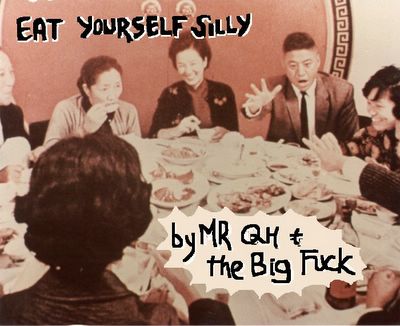
1) PICK YOUR OPPONENTS.
This rule only applies in very select circumstances, but it is fundamental to eating as much as you can. There is a very simple rule of thumb; 65% of the female population is permanently on diet, with 50% of the remaining 35% being able to eat very little. Thus, only about 17.5% of women eat as much as men. You have to watch out for guys, especially fat guys or atheletes. Both are very dangerous due to their healthy appetites. Of course, forewarned is forearmed; the more you know about eating habits, the better you can gauge which table at a free-seating banquet to sit at. If there are many empty seats, see who's sitting there - pretty girls always attract more male company. The best bet is a table almost filled with girls.
Here are some sample tables: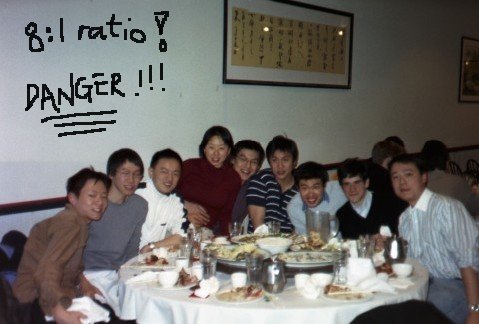

2) GETTING STARTED
Usually, at chinese dinners, there is always soup, be it sharks' fin, or a poorer imitation. Soon after the soup, they usually serve a cold dish; which do you eat first?
Many of you will answer the soup. YOU ARE WRONG! You may argue that the soup, once cold, will not be nice. However, you are forgetting that the cold dish is the first communal dish to be served, just as everyone is hungry. Be sure to get your share! The soup is already yours; if you're lucky, someone at the table might not like their soup and you might even get TWO bowls; the cold dish, however, will always have people willing to eat it. Make sure you eat all the jellyfish you can, before it disappears. Pineapple slices / cherry bits are also quite popular, so be sure to attack those before the other greedy bastards at your table beat you to it.
3) THE MEAL ITSELF: DETERMINING WHAT IS "YOURS"
Here, we move into the real intricacies of this guide. Based on the basic principle outlined above, we already see that some things are 'yours' whereas some things at a dinner are 'communal'. Soup, being individually portioned, is obviously yours. You can thus save it for later, while happily tucking into all the rest of the food. The same also goes for rice. With the dishes in the centre, though, it's slightly harder to tell. Determining what is logically 'yours', therefore, is thus integral to making sure you don't get ripped off.
First, anything with clear-cut portions is easily divisible. For example, let's say there are five chicken wings, and five people eating. You know for sure that one is yours. The same goes for dim sum. If there's four pieces of siu mai, and four of you eating, one is DEFINITELY yours; it's very bad form of other people to deny you your siu mai tasting rights, after all. You can thus safely ignore these dishes in the initial feeding frenzy.
Next, anything with large bones that remain on your plate (chicken / duck / pork chop with bone) or shells (crab, prawn, lobster) are very easy to keep track of. People who eat a lot of these will immediately be recognizable from their large pile of animal remnants on their plates. Thus, you can go slow with these things. If you see people piling up large piles of shells, be sure to ask them, in as pointed a fashion as you can, something to the effect of, 'hey, is the chicken nice?'
This will draw attention to their greediness, and they will eat slower, because they will think that everyone is watching them. Seize this opportunity to eat more.
4) HOT PROPERTY
Obviously, some things disappear faster than others. The keropok on the chicken dishes, for example, is obviously a hot commodity. This must always be terminated with extreme prejudice. You can keep some on your plate, but be aware that keropok is very visible. Better to chow down on it as quickly as possible, to avoid a noticeable trail of food. Fish, as well, is usually extremely popular, due to the fact that it's expensive, and also delicious. Regard the image below: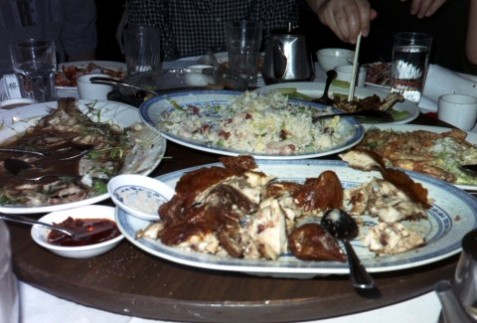
As you can see, the fish has been totally devoured early on in the dinner, as well as most of the keropok on the chicken. Hopefully, this makes it obvious which elements you should target first.
As a general rule of thumb, however, meat with no bones is always hot property. Don't worry about your rice, you can always eat it with the onions later, since nobody eats the onions. You're a growing individual, and you need your protein.
5) YOUR PLATE
Your plate can obviously serve as a buffer zone, allowing you to store certain 'hot' commodities, such as that extra bit of fish, or the little bit of meat. However, anything remaining on your plate for too long can become painfully conspicuous. Always remember, clear your plate early, clear it often, and try to get it discreetly changed by the service whenever possible so that you look like you've been eating less than you have.
6) ADVANCED TACTICS
One of the best things about Chinese cuisine is the ability to serve other people ... with the things you already know are rightfully theirs. Give the biggest eater at the table his share of the chicken early, and he'll have to eat it, or appear greedy, ungrateful, or both. This will occupy him, and free you up to eat all the hotplate beef, you tricky bugger.
Other advanced tactics include drawing attention subtlely to big eaters. Be sure not to be too obvious; if you appear to care too much, the game is up. Gentle ribbing always works; some other greedy person at the table will get in on the act, and soon you will be able to distract attention away from yourself to the other big eaters, while you chow down.
7) FINALLY
Always be sure not to point out that you've eaten more than everyone else. You don't want your friends resenting you when the bill comes along. Wait for other people to comment on their state of satiety, especially if you suspect everyone else ate less than you. If you've stuffed yourself silly at everyone else's expense, and they want to go for round 2, always cite being tired, rather than full, as your excuse for heading home to sleep off those well fought for calories.
Hopefully, this helped you in your quest to stuff your face. Until next time, dig in, pig out and get more bang for your buck!
Today's Blog Babe: The Mail Order Bride; she would have made it to the original post, but then, seeing as to how she made all her livejournal archives friends only, there are occasional picture droughts on her site. Don't be like that, leh, miss, we're all very friendly, you know.
posted by J Schnorng | 11:23 PM

0 Comments:
Post a Comment
<< Home